


Product Category
Product TitleLooking for something specific? Recently viewed by our visitors:
Publisher: Eistechnikcenter GmbH · Original article published and editorially reviewed on 9 October 2026. English translation prepared on 20 October 2026.
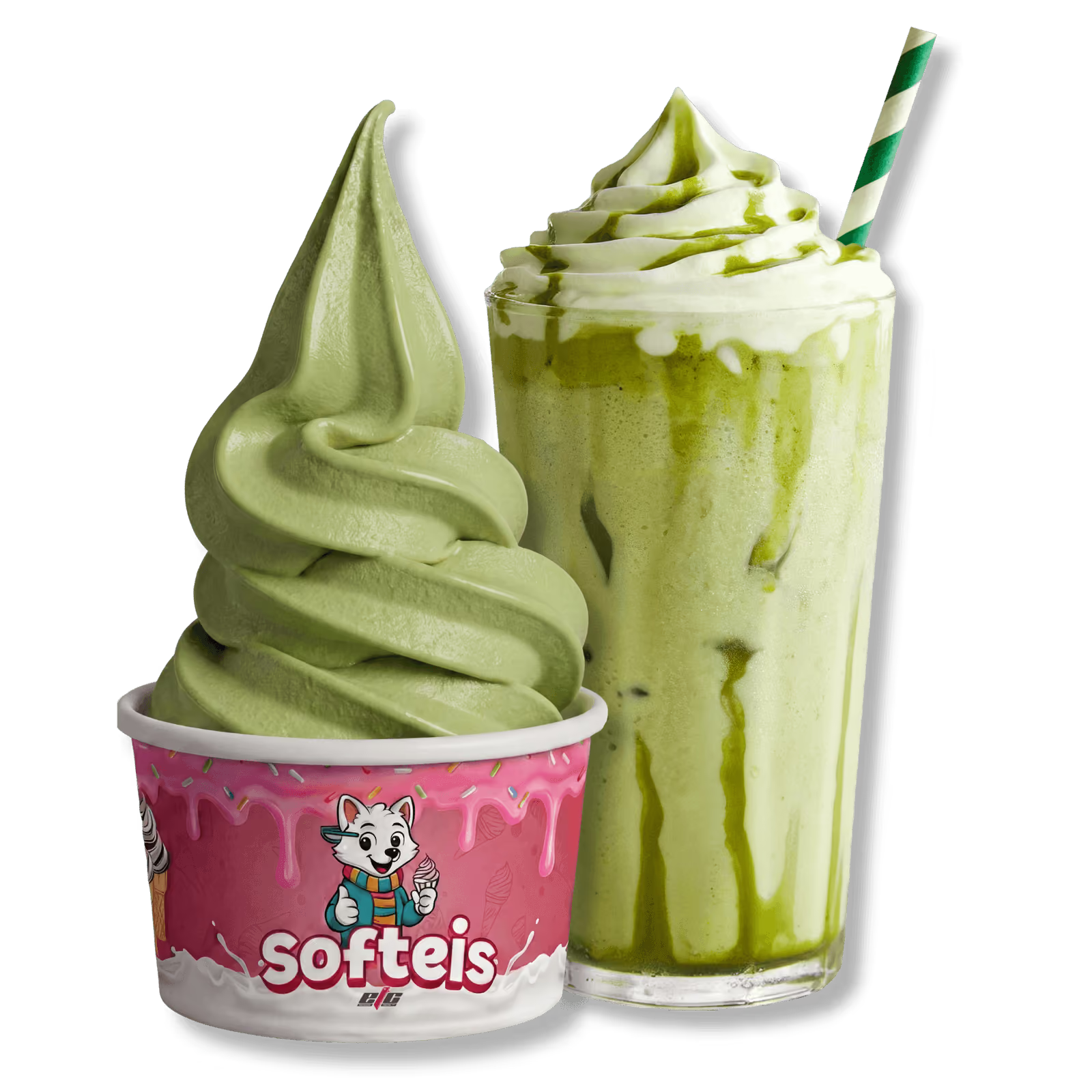
A warm matcha latte with breakfast, or green soft serve alongside a freshly baked waffle: matcha can connect your drinks and dessert menus throughout the year. For planning, it helps to distinguish the two. A latte is made at the drinks station with matcha, water and milk or a suitable plant-based alternative. Matcha soft serve is a frozen dessert dispensed directly from a machine.
First consider where the new offering fits into your guests’ visit. Do you want to sell another cup with breakfast, offer dessert after lunch, or combine both? Each approach places different demands on workspace, preparation and serving. This comparison helps you plan the two workflows. You can then explore suitable equipment on our matcha soft serve concept page.
Your team needs a repeatable recipe for a warm latte. As a starting point, tea producer Ippodo demonstrates sifting matcha, whisking it with warm water and then adding warm or frothed milk. Adjust quantities and temperature to the tea used, your cup size and your supplier’s recipe recommendations.
Useful equipment can include precision scales, a sieve, a bowl with a matcha whisk or suitable mixing tool, and a way to heat water to a controlled temperature. Add suitable refrigeration for milk and, for warm drinks, your existing steaming or frothing equipment. Check how the extra preparation step fits around your existing coffee orders.
Use a recipe card to define the amount of tea and liquid in each serving, whether sweetener is included and which vessel to use. Give an iced version its own recipe card with the appropriate ice and liquid quantities. Guests can then order a clearly described drink, and different team members can prepare it consistently.
Soft serve requires a complete ice cream mix suitable for the specific machine. Tea powder alone does not fulfil this role. Match preparation, processing and the desired consistency to the product instructions and machine manual. A finished latte recipe is therefore not automatically suitable for filling a soft serve machine.
One specific equipment example is the Carpigiani 161 T G SP for planning a matcha offering. Carpigiani describes this as a single-flavour machine with gravity feed and a 5-litre mix hopper. Gravity feed allows the mix to flow into the freezing cylinder by gravity. We discuss which matcha mix and settings suit your plans for the version offered. Hopper capacity does not indicate how many servings you will sell.
Our ingredient range includes Matcha Green Tea 500 Fast. The product page lists a recipe for ice cream and ingredients containing milk. Processing as soft serve must be matched to the machine. For a plant-based dessert menu, choose a suitable complete mix and appropriate toppings.
Preparation: For latte, arrange the tea, milk, vessels and tools at the drinks station. For soft serve, also plan mixing, filling and getting the machine ready for service. Record the tasks and responsibilities in a short checklist.
Ordering and serving: A latte involves measuring, whisking, preparing the milk and combining the ingredients for each order. With a ready-to-use soft serve machine, dispense the defined portion and add the chosen toppings. When comparing timings, include payment, serving and restoring a clean workstation.
Space: Map the routes for cups, containers, milk, mix and used equipment. For the soft serve machine, allow for the specified ventilation clearances, connections and cleaning access as well as its footprint. Use the documentation for the exact version to establish these requirements.
Daily care: Schedule appropriate cleaning for drinks tools, the milk system and the soft serve machine. Follow each manufacturer’s instructions and your business hygiene plan for intervals, storage and processing. Accessible workstations make this routine easier for your team.
Our suggestion for a practical trial: run through a mixed order of coffee, latte and dessert. Record active working time, waiting time and individual tasks separately. This helps you assess whether one person can manage the workflow or whether clearly dividing the serving tasks would be useful.
You could start with a warm matcha latte and a matcha dessert with a clearly defined portion. As a seasonal serving idea, combine soft serve with a warm waffle or a slice of cake. Add the ice cream just before serving. A small tasting portion alongside a hot drink can also help guests try the flavour.
For a manageable trial, initially choose one garnish that fits your existing menu. Record portion weight, topping quantity and presentation, and photograph the actual serving. Ask guests specifically about flavour and portion size. These combinations are suggestions for your business; your own sales will show how well they are received.
Record latte and soft serve as separate items at the till. This lets you compare units sold, ingredient usage and labour for both offerings. Alongside tea or ice cream mix, include milk, garnish, crockery or packaging, and allocated labour, energy, cleaning and equipment costs. The amount remaining after ingredients and packaging is only an intermediate figure before the other operating costs.
For the soft serve option, the matcha portion calculator provides adjustable calculation assumptions. Use your own purchase prices and observed sales to develop the offering step by step.
Start by planning two suitable preparation methods. A soft serve machine is selected for the frozen dessert; a latte is made at the drinks station. If you are considering a combination machine, check its explicitly documented functions and permitted recipes.
Start with your existing orders: a well-organised coffee station offers a starting point for latte. A dessert menu and a suitable machine location provide a basis for soft serve. Assess both ideas with a small offering and the working time actually available.
Highlight the occasion: warm latte with breakfast, matcha soft serve with a warm waffle, or a small afternoon dessert. A clear menu and a photograph of your own serving help guests choose.
Tell us about your planned drink or dessert, desired portion size, existing equipment, available space and connections. If you already own a machine, include its model and serial number. Discuss your matcha offering with Eistechnikcenter — we can help you coordinate equipment, ingredients and the workflow at your premises.
Technical sources, checked for the original article on 9 October 2026: Ippodo: preparing a matcha latte; Carpigiani: 161 T G SP model description. The linked Eistechnikcenter product pages provide further details of our range.


Für Eiscafés und Gastronomie
Finden Sie die passende Ausstattung für Ihr Eisgeschäft – mit persönlicher Beratung, Showroom und eigener Werkstatt in Luckenwalde.
Carpigiani-Technik, Eisrohstoffe und Zubehör für Softeis, Speiseeis, Açaí und Milchshakes.
Besprechen Sie Ihr Angebot, Ihren Platz und Ihren Bedarf mit uns. Lernen Sie passende Maschinen im Showroom kennen.
Für Wartung, Reparatur oder ein Ersatzteil: Nennen Sie uns Hersteller, Modell und Ihr Anliegen über das Serviceformular.

Ihr Fachpartner für Eismaschinen, Softeismaschinen und Eiscafé-Ausstattung in Luckenwalde.
E-Mail: info@eistechnikcenter.de
Mo.–Fr. 08:00–20:00 Uhr
Sa. 09:00–19:00 Uhr · So. geschlossen
Mo.–Fr. 09:00–18:00 Uhr
Sa. 09:00–16:30 Uhr · So. geschlossen
Rohstoffe, Ersatzteile und Verbrauchsmaterial können Privat- und Geschäftskunden bestellen. Maschinen, Mietangebote und Dienstleistungen richten sich weiterhin ausschließlich an Geschäftskunden im Sinne des § 14 BGB. Für Verbraucherkäufe gelten die Informationen zum Widerruf; die ausschließlich für Geschäftskunden bestimmten Geschäfts- und Lieferbedingungen finden darauf keine Anwendung. Preise im Privatkundensortiment werden inklusive Mehrwertsteuer ausgewiesen; bei ausschließlich gewerblichen Angeboten gelten Nettopreise zuzüglich Mehrwertsteuer.
